
Flow & leveling additives
🔍 Search for specialty additives solutions
Arkema flow & leveling portfolio
Arkema offers a dedicated portfolio of flow and leveling additives designed to support surface control, defect reduction and film appearance in liquid coating systems. This portfolio is built around Crayvallac® technologies, which deliver consistent flow performance and surface uniformity across demanding industrial and automotive applications.
Crayvallac® solutions
Crayvallac® additives enhance flow and leveling by improving wet film mobility and smoothing surface tension gradients during application and drying. Their silicone-free and wax-modified polyolefin chemistries help mitigate common surface defects and provide a reliable alternative for formulators who require defect control without the contamination risks associated with silicone-based leveling agents.
Key benefits
• Smoother wet film formation and reduction of crater, pinhole and orange peel defects
• Improved gloss uniformity and surface appearance
• Silicone-free solutions for improved intercoat compatibility
• Enhanced slip, handling and surface resistance
• Robust performance in demanding industrial coating environments
Main applications
Crayvallac® additives are used across automotive, industrial, packaging, general metal and decorative coatings, where appearance, defect control and long-term finish integrity are essential. Their versatility supports multi-layer systems, critical finishing operations and environments where process stability and consistency are required.
Mechanism and key benefits of flow and leveling additives
Flow and leveling additives function at the surface–interface of coatings by regulating surface tension gradients, wetting, and viscoelastic flow during the early stages of application and drying. By smoothing these gradients, the additives limit coating defects such as craters, pinholes, and orange peel, enabling the formation of a uniform wet film that converts into a high-quality final coating surface with improved appearance, gloss, and optical consistency. Within a formulation, the mechanism relies on the ability of the additive to modify the mobility of the polymer binder, pigment dispersion, and solvent–water balance, allowing the coating to level, eliminate entrapped air, and achieve continuous film formation before curing is complete. Depending on chemistry (e.g., acrylic, polyurethane or modified polyolefin structures), flow additives may also support compatibility, adhesion control, or long-term surface performance.
Arkema’s Crayvallac® surface modifiers illustrate this mechanism through wax-based and polyolefin-modified technologies that selectively migrate toward the coating surface during drying, reducing friction, improving slip, and enhancing surface resistance to abrasion or handling. Unlike silicone-based leveling agents, Crayvallac® solutions offer silicone-free alternatives that deliver robust leveling and film uniformity while minimizing risks of intercoat adhesion issues or contamination in multi-layer systems — a key advantage for automotive and industrial coatings where both visual consistency and long-term performance are critical.
Sustainability and safer products
Sustainability is emerging as a key driver in additive selection. Customers increasingly prioritize silicone-free, HAPs-free, and low-emission technologies, alongside solutions compatible with waterborne and high-solids systems. These preferences are reinforced by the need to reduce volatile components, avoid substances of concern, and ensure safer handling for operators. Flow & leveling technologies aligning with these criteria help formulators meet compliance targets without compromising application behavior or final performance.
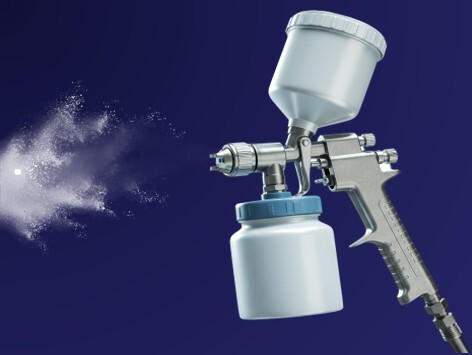
CRAYVALLAC® FLOW-450 is a silicon-free flow and leveling agent designed to improve film formation, reduce surface defects and ensure reliable gloss retention across a wide range of coating systems. Its intrinsic defoaming properties and strong versatility make it a valuable tool for formulators seeking smoother surfaces, improved appearance and robust application performance without compromising formulation stability.
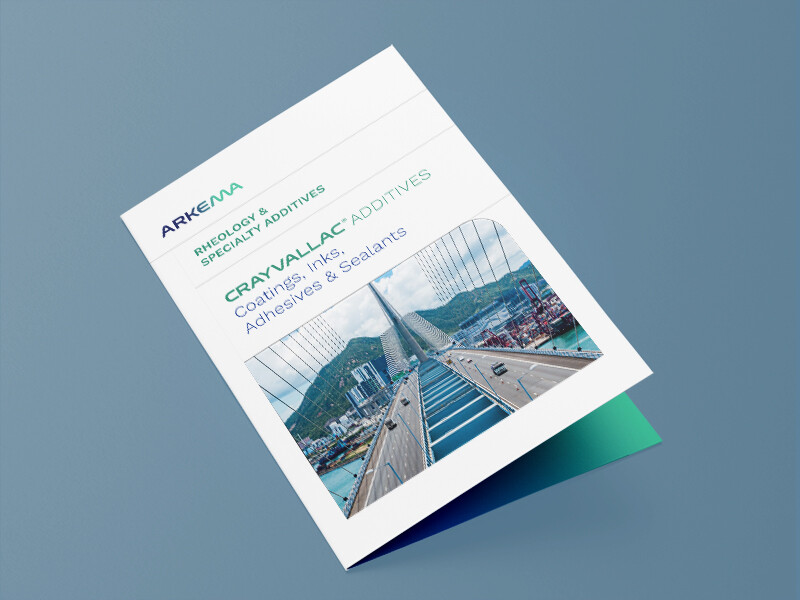
Download our flow & leveling brochure
More information about flow and leveling additives
-
FLOW & LEVELING SOLUTIONS


Often asked questions to our flow & levelling additives experts
Flow and leveling additives help control the wet film behavior of a liquid coating during application and drying. By regulating surface tension and film mobility, they minimize surface defects (craters, pinholes, gloss irregularities) and promote a smooth, uniform cured film appearance without compromising intercoat adhesion or formulation compatibility.
Selection depends on system chemistry (waterborne, solventborne, high solids), binder type (acrylic, polyurethane, polyester), application requirements (industrial, automotive, architectural) and appearance targets (gloss, transparency, defect tolerance). Silicone-free options are preferred when contamination or intercoat compatibility is a concern, whereas silicone-modified agents may offer superior spreading and film appearance on demanding surfaces.
Yes. Advances in silicone-free technologies such as wax- or polyolefin-modified surface additives provide robust leveling, anti-defect performance and excellent cured film appearance without the contamination risks associated with silicone-based agents. These solutions are widely used in automotive, metal and multi-layer coating systems requiring clean downstream processing.
In many cases, yes. Formulators may pair flow and leveling additives with dispersing agents, slip additives or mar resistance technologies to balance appearance, handling and cured surface performance. Compatibility and sequence of addition should be assessed experimentally, especially when optimizing gloss, transparency, slip or surface energy interactions.