
UV/EB curing & advanced materials
🔍 Find UV/LED/EB curing & advanced materials
Discover our UV/LED/EB curing & advanced materials solutions by product family
Acrylate Resins: enable fast cure and broad formulation versatility
Sartomer offers a broad range of specialty acrylate monomers and oligomers designed for UV, LED, EB, peroxide and amine curing technologies, as well as for copolymerization. The product line includes acrylate monomers, epoxy acrylates, urethane acrylates, polyester acrylates, acrylated acrylics and other performance grades that support the formulation of high-performance energy-curable systems across coatings, inks, adhesives and advanced materials.
Key benefits
-
Adhesion
-
Abrasion, chemical, water, stain resistance
-
Hardness, toughness
-
Flexibility
-
Pigment wetting
-
Reactivity
-
Weatherability, etc.
DISCOVER OUR SPECIALTY ACRYLATE RESINS
Methacrylate Resins and Crosslinkers: deliver long-term durability and thermal performance
Sartomer provides a broad portfolio of specialty methacrylate monomers and oligomers spanning mono-, di- and multifunctional grades with diverse backbone chemistries. These products serve as reactive diluents for advanced materials and as co-monomers for polymer synthesis.
Key benefits:
- Chemical, water, heat resistance
- Hardness, toughness
- Flexibility
- Hydrophobicity, water solubility
- Reactivity, etc.
DISCOVER OUR METHACRYLATE RESINS
Cationic Resins: achieve durable curing and superior adhesion
Sartomer offers a portfolio of UviCure cationic resins engineered for high-performance energy-curable formulations. Cycloaliphatic epoxy grades are recognized for their strong adhesion, low shrinkage and resistance in demanding environments. Oxetane resins can be combined with cycloaliphatic epoxies to accelerate curing, adjust viscosity and enhance hardness and adhesion, particularly on challenging substrates.
Key benefits
- Outstanding durability: Excellent thermal and chemical resistance for long-term performance.
- Low shrinkage: Ideal for thick films, encapsulation and complex geometries.
- Extended curing: Polymerization continues post-irradiation for a complete, reliable network
DISCOVER OUR CATIONIC RESIN TECHNOLOGIES
Photoinitiators: enable fast and efficient UV curing
Sartomer supplies photoinitiators under the Speedcure product line for both free radical and cationic UV-cured materials. These products are valued for their rapid response under UV and LED technology, and their compatibility with multiple resin families.
Speedcure products are used globally in 3D printing, electronics, automotive finishes, packaging, graphic arts and optical applications, and are frequently integrated with additive components such as UV stabilizers to fine-tune appearance and color stability.
Key benefits
- Fast and efficient initiation for UV and LED curing
- Good balance of surface and depth cure
- Suitable for clear, pigmented and filled systems
DISCOVER OUR photoinitiator TECHNOLOGIES
UV Stabilizers: protect surfaces and extend durability
UV stabilizers are essential additives that prevent degradation caused by UV light, ensuring long-lasting performance and appearance in coatings, adhesives, and polymer systems. By absorbing or neutralizing harmful UV radiation, these stabilizers help maintain color stability, surface integrity, and mechanical properties over time.
DISCOVER OUR UV STABILIZER TECHNOLOGIES
HOW DOES IT WORK?
Understanding UV/LED curing process
In UV and LED curing, UV resin components polymerize when exposed to specific light wavelengths in the presence of suitable photoinitiators.
The process generates cross-links within the resin network, enabling rapid cured films or 3D structures without evaporation or oven drying. This instant conversion at room temperature can be adjusted depending on type of resin, formulation requirements and production constraints, offering quick curing cycles for a variety of applications.
HOW DOES IT WORK?
Understanding EB curing process
Electron Beam (EB) curing is a high-energy process in which accelerated electrons directly initiate polymerization and crosslinking within the resin system.
Unlike UV or LED curing, EB curing does not require photoinitiators and is not limited by light penetration or pigment concentration, making it suitable for highly filled, pigmented or opaque formulations.
EB curing can be performed at room temperature and provides fast throughput, enabling dense, cured networks for coatings, inks and adhesives used in packaging, industrial and specialty markets.
Sustainable advantages of photocuring technologies
UV, LED and EB curing technologies can offer sustainability benefits compared to conventional thermal approaches:
- Very low VOC emissions
- No solvent waste or water evaporation
- Reduced odors and lower hazard potential
- Four times less energy consumption than traditional drying systems
- Higher productivity and reduced cycle time
- Instant on/off with room-temperature curing
- Compact equipment footprint and simplified line integration
- Improved material handling and reduced space utilization
These benefits can help to reduce scrap, improve operational efficiency and support compliance with regulatory or corporate sustainability objectives.
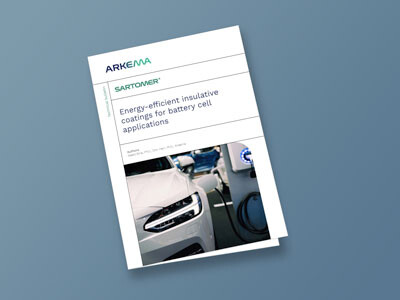
Automotive manufacturers are increasingly focusing on electric vehicle (EV) production, driving demand for advanced battery-related coatings. UV-curable coatings are gaining popularity due to their rapid curing, low energy consumption, and ease of application, making them ideal for large-scale production. Arkema's innovative UV-curable acrylate resins and photoinitiators offer excellent dielectric properties, adhesion, flexibility, and assembly capabilities, and support the EV industry's need for advanced battery coatings.
Amidst rising and fluctuating energy expenses, increasingly stringent emission regulations, and an overall drive for environmentally conscious manufacturing practices, many finishing experts are seeking solvent-free curing solutions. We offer diverse materials for various curing technologies, empowering our customers to reduce their energy consumption and adopt more sustainable practices.
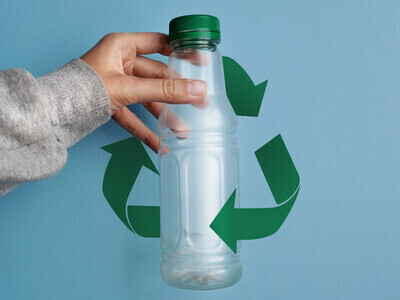
The Arkema patent pending de-inking technology is an advanced approach to enable recyclability of plastic substrates with or without a removable primer. This innovation will support our customers in their journey to a more circular and sustainable future and enable more versatility in product development for the recycling of plastics.
More information ...
-
Monomers Product Selector
-
Oligomers Product Selector
-
Photoinitiators Product Selector
Often asked questions to our photo-curable resin & additive experts
UV-curable resin cures extremely quickly-often within seconds to a few minutes, depending on the formulation, film thickness, and light intensity. The curing process is activated by UV or LED light sources, which provide the energy needed for photoinitiators to start polymerization. For industrial applications, specialized UV lamps, LED curing systems, or electron beam (EB) equipment are commonly used to achieve consistent and efficient results. LED technology is increasingly popular because it offers energy efficiency, low heat emission, and compatibility with sensitive substrates. In contrast, EB curing is ideal for thick films and solvent-free processes without photoinitiators. Choosing the right equipment ensures fast processing, high-quality finishes, and optimized performance for coatings, inks, and adhesives.