
Waterborne coating resins
🔍 Search for waterborne resins
Proven waterborne solutions for demanding applications
To capture the challenges of today and anticipate the ambitious requirements for tomorrow, we are continuously raising expectations in terms of performance, aspect and durability.
Arkema provides a large range of waterborne binders used in many applications like architectural coatings, industrial coatings, building and construction, and textile, nonwovens and leather. These binders are designed to meet specific requirements such as chemical resistance, water resistance, mechanical and chemical properties, durability, and abrasion resistance.
Arkema offers a large range of products to meet your sustainability goals: Low or ultra-low VOC, no APEO, no formaldehyde releaser, Ecolabel, and OEKO-Tex.
Waterborne Acrylics
We put our expertise with monomer integration into the development of waterborne acrylic binders for interior and exterior applications based on different technologies such as dispersion polymers, solution polymers and post-emulsified polymers. Our various monomers (including acrylic, methacrylic esters or acids, methacrylic acids, and special monomers) reinforce the performance of polymers to meet industry specifications such as Master Painters Institute® (MPI®) and will raise your expectations in terms of performance, aspect and durability on a variety of substrates including wood and metal.
ENCOR® is a range of pure waterborne acrylic and styrene acrylic binders developed to perform well in architectural coatings, building and construction coatings, low VOC and SVOC applications, industrial 1- or 2-component coating systems, and in textile and nonwovens with thermoplastic, self-crosslinking or thermoset polymers.
The unique technology platform of SNAP® structured nano-acrylic polymers includes acrylic dispersions that offer exceptional performance in architectural coatings at zero or very low VOC levels, including outstanding gloss and excellent block resistance.
SYNAQUA® is a world-class range of acrylic post-emulsified waterborne systems that can reach very low VOC (below 150 g/l) while keeping the advantages of solventborne systems including high gloss, water and chemical resistance, good durability and quick hardness development.
Active in markets: Architectural, building and construction, industrial, textile and nonwovens
Our brands: ENCOR®, SNAP®, SYNAQUA®
Waterborne Alkyds
We put our expertise with monomer integration into the development of acrylic binders based on different technologies such as dispersion polymers, solution polymers and post-emulsified polymers. Our various monomers (including acrylic, methacrylic esters or acids, methacrylic acids, and special monomers), reinforce the performance of polymers and will raise your expectations in terms of performance, aspect and durability.
Active in markets: Architectural
Our brand: SYNAQUA®
Vinyl Acrylics
Our vinyl acrylics include polymers based on vinyl ester dispersion including vinyl homopolymers, vinyl acetate and vinyl versatate copolymers.
Our vinyl acrylic polymer range provides enhanced properties such as good wet adhesion, grain cracking, scrub resistance and glossy effect.
Active in markets: Architectural
Our brands: ENCOR®, NEOCAR®
Opaque Polymers
Arkema’s opaque polymer is a highly efficient, voided latex product that improves hiding and whiteness in paints and coatings and functions as a partial replacement for titanium dioxide (TiO2).
CELOCOR® offers important benefits including excellent efficiency, wet and dry hiding performance comparable to competitive opacifiers, wide formulating latitude, excellent performance across a broad PVC range and improved tint strength performance.
Our brand: CELOCOR®

SYNAQUA® 4804 is an APEO and ammonia-free short oil alkyd emulsion designed for use in a wide variety of coatings in which performance similar to solvent-based alkyds are desired. It offers the coatings formulator a low VOC option to develop the highest gloss products while giving the application feel of a solvent-based alkyd.

Made from 97% biobased raw materials coming predominately from Nordic foresting byproducts,
SYNAQUA® 4856 offers the right balance for your interior low emission matte to gloss wall paints

SYNAQUA® 9511 acrylic polyol emulsion is a waterborne binder that offers a better mix of performance attributes and sustainability (low VOC levels) compared to a traditional solventborne acrylic polyols when used in 2K or 1K stoving systems.
Waterborne coatings flagship products
CELOCOR® AF
SNAP® 720
ENCOR® 2797
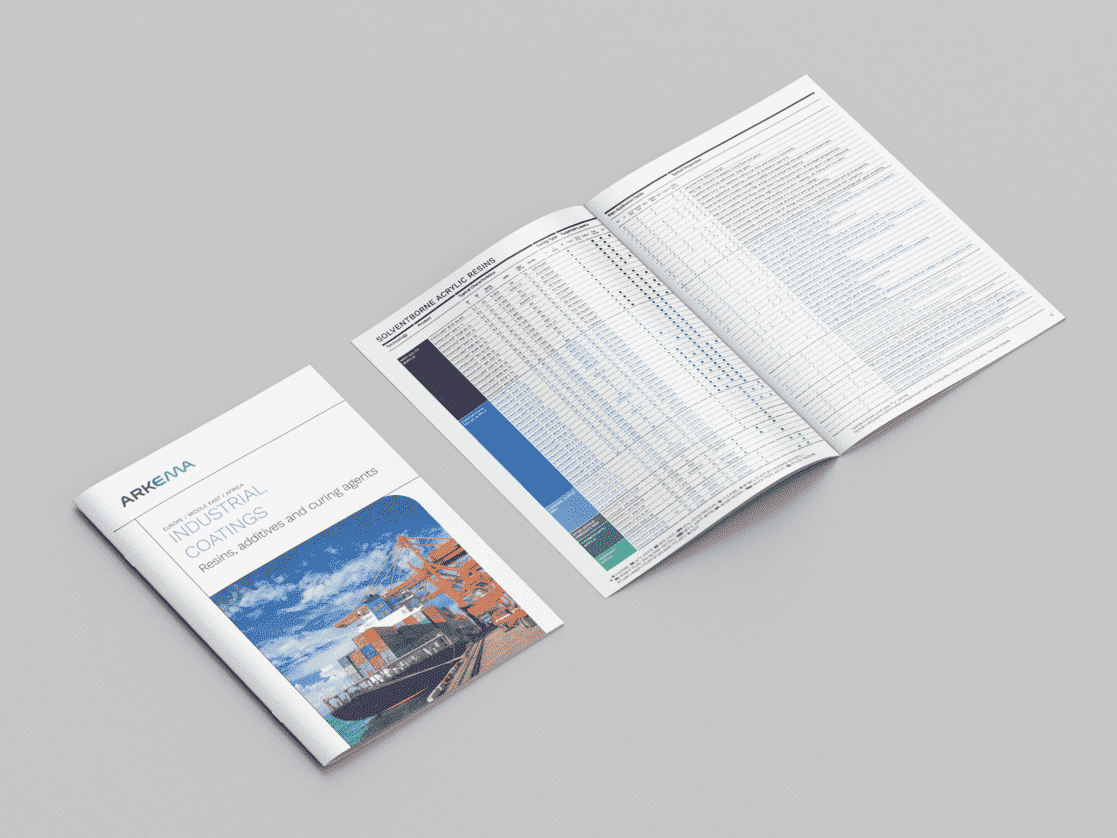
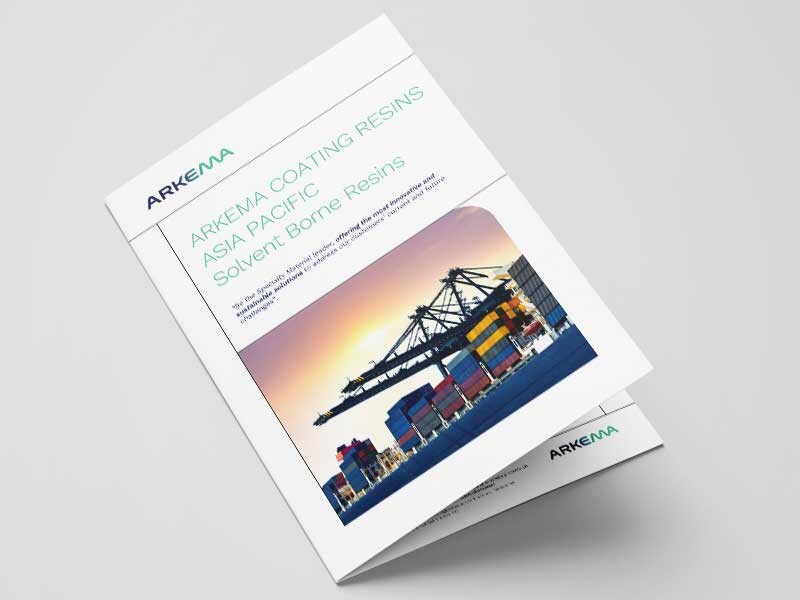
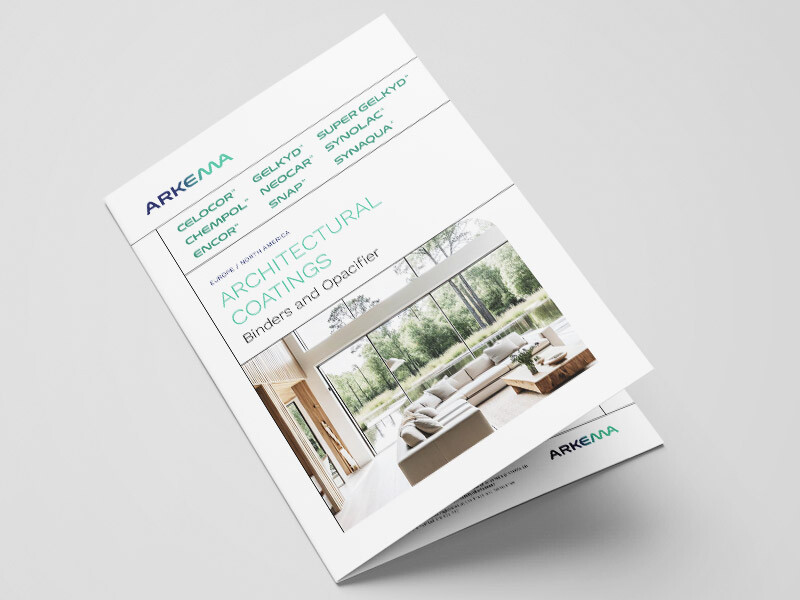
More technical documents
-
SYNAQUA® 4856 Flyer
-
SYNAQUA® 4804 Flyer
-
ENCOR® 2787 Flyer
-
SNAP® 720
-
ENCOR® 317
-
CELOCOR® AF Case Study Flyer
Waterborne coating key advantages and benefits
Resins for waterborne coatings play a central role in the transition toward high-performance and more sustainable coating systems. By replacing traditional solvent technologies with water-based solutions, these advanced materials help reduce VOC levels while maintaining the functional and aesthetic expectations of modern coatings and paints.
Designed to deliver measurable benefits, these resins for waterborne coatings combine optimized polymer design and controlled emulsions to support durability, film integrity, and long-term reliability across multiple markets.
Performance & functional properties
Arkema’s resins for waterborne coatings are engineered using advanced polymers, including acrylics, alkyd, epoxy and epoxy ester chemistries. This diversified, based portfolio delivers balanced mechanical strength, flexibility, and chemical resistance, ensuring robust coating performance over time.
These waterborne resins provide excellent adhesion on a wide range of substrates such as metal and mineral surfaces, making them ideal for primers, decorative and protective systems. Optimized film formation improves surface appearance, supports high gloss, and ensures controlled wetting and uniformity.
Formulation flexibility across applications
Designed for various applications, resins for waterborne coatings provide formulators with a robust platform for efficient formulating of coatings and paints. Their compatibility with pigment, fillers, and selected additives allows each resin to act as a functional agent in achieving the desired balance of rheology, appearance and durability.
This flexibility simplifies production, reduces formulation complexity, and supports consistent quality across architectural, industrial and construction-related applications.
Sustainability, regulation and market readiness
Through advanced technology and material selection, Arkema’s resins for waterborne coatings help customers meet increasingly stringent environmental requirements without compromising technical properties. The reduced reliance on solvent systems lowers environmental content, improves workplace conditions, and aligns with global VOC regulations.
These materials enable manufacturers to respond to evolving regulatory expectations while maintaining strong value propositions in demanding markets, delivering solutions that balance sustainability, durability, and long-term coating performance.
Discover the right solution for your needs
Explore Arkema’s portfolio of resins for waterborne coatings and identify the technologies best suited to your applications, performance targets, and sustainability goals.
Frequently asked questions to our waterborne coating experts
Resins for waterborne coatings are polymer materials dispersed in water and used as the main film-forming component in coatings and paints. They provide key properties such as adhesion, durability, resistance, and surface appearance while reducing the need for solvent-based systems.
Waterborne resins help reduce VOC levels, improve workplace safety, and support compliance with environmental regulations, while delivering high performance in terms of durability, resistance, and aesthetics.
These resins are used across various applications, including architectural and industrial coatings, construction materials, primers, protective systems, and decorative paints for metal and mineral substrates.
By using water as the primary carrier instead of solvents, waterborne resins reduce environmental impact, lower VOC emissions, and enable more sustainable coating formulations without compromising performance.
Yes. Thanks to advanced polymer technologies, waterborne resins can achieve excellent adhesion, chemical and mechanical resistance, high gloss, and long-term durability, even in demanding environments.