
Rheology Modifiers
🔍 Search for specialty additives solutions
Rheology modifiers for high-performance and sustainable paints
A rheological modifier is a critical functional element in modern paints and coatings, used to control viscosity, flow and gel behavior throughout formulation, storage and application.
In coating formulations, this term refers to functional additives that structure liquid systems under different shear conditions, enabling formulators to fine-tune application behavior, film build and long-term stability.
Arkema develops advanced rheological solutions based on deep expertise in specialty polymers and formulation science.
These solutions are designed to perform across a wide range of materials, delivering consistent coating properties and reliable performance in demanding environments.
Rheology modifiers for waterborne systems
For water-based systems, synthetic rheology modifiers provide highly effective and easy-to-handle solutions based on various chemistries. These rheology modifiers offer a versatile and simple solution, thanks to their diverse formulations. When it comes to optimizing the flow and consistency of water-based products, rheology modifiers are the key. These modifiers excel at delivering effective solutions across different applications, making them an indispensable tool for product development adding value to formulations in the field of water-based systems.
HEUR (Hydrophobically Ethoxylated URethane)
HEUR (Hydrophobically Ethoxylated Urethane) rheology modifiers are non-ionic, associative polyurethane-based additives designed to control viscosity and flow in coating formulations.
Their mechanism relies on hydrophobic associations between polymer chains and formulation components, enabling efficient rheological control without requiring pH adjustment.
Key benefits & main applications:
Key benefits of HEUR rheology modifiers include improved flow control, enhanced leveling, strong sag resistance and consistent handling properties during application.
Their associative behavior enables shear-thinning under application conditions while maintaining sufficient structure at rest, resulting in reliable performance and formulation consistency.
Main applications include architectural and industrial coatings, inks, adhesives and sealants, as well as selected home care and specialty formulations requiring stable and predictable rheological behavior.
HASE (Hydrophobically modified Alkali Swellable Emulsions)
HASE rheology modifiers are associative polymers designed to control viscosity and flow in water-based formulations. Their thickening mechanism relies on pH-activated swelling combined with hydrophobic interactions, enabling efficient structure build at rest and smooth flow under shear during application.
Key benefits & main applications:
Key benefits of HASE rheology modifiers include strong low-shear viscosity development, good sag resistance, and effective balance between structure and flow. They contribute to formulation stability and consistent application behavior across a wide range of conditions.
Main applications include architectural and decorative paints, water-based coatings, and selected construction or industrial formulations where controlled rheology, ease of application, and cost-performance balance are required.
ASE (Alkali Swellable Emulsions)
ASE rheology modifiers are designed to adjust viscosity and flow in water-based coatings and paints through controlled associative interactions.
By combining hydrophobic and hydrophilic segments in an emulsion polymer, ASE thickeners build a reversible network that increases low-shear viscosity while allowing smooth high-shear flow during application, enhancing overall rheological balance in diverse formulations.
Key benefits & main applications:
Key benefits of ASE rheology modifiers include strong sag resistance, improved leveling, and enhanced wet edge retention, making them effective at maintaining consistent viscosity across varying shear conditions. They also help stabilize pigment and filler dispersions while supporting efficient application across substrates.
Main applications include architectural and decorative paints, interior and exterior coatings, and other water-based systems where controlled flow and finish quality are critical for performance and appearance.
Urea Urethanes
Urea Urethane rheology modifiers are non-associative polymer additives engineered to control viscosity and flow in water-based coatings and paints.
By combining urea and urethane segments in a tailored macromolecular architecture, these modifiers build controlled internal networks that improve low-shear viscosity while maintaining smooth high-shear flow during application.
Key benefits & main applications:
Key benefits of Urea Urethane rheology modifiers include good sag resistance, improved leveling, enhanced wet edge retention, and excellent compatibility with a wide range of binder systems.
Their non-associative mechanism also contributes to stable pigment and filler dispersion, improving formulation robustness and overall coating performance. Typically, they can be post-added during the paint manufacturing process for viscosity adjustment.
Main applications include interior and exterior paints, architectural and decorative coatings, and other water-based systems where consistent rheology, smooth flow, and reliable finish quality are critical.
Rheology modifiers for solvent-based, high-solids, and solvent-free systems
Rheology modifiers excel in challenging scenarios, delivering superior performance for demanding applications with a focus on high efficiency. Developed for optimal results, they enhance processes and outcomes in rigorous environments. In different industries, rheological control is crucial for several reasons. For instance, high shear resistance and the ability to modify the flow behavior of materials are vital for ensuring proper application and adherence to surfaces, by helping to improve the desired viscosity and texture of the materials.
Organic powder
Organic Powders rheology modifiers are dry, powder-based additives designed to modify viscosity and control flow in a variety of coating and paint formulations.
Unlike liquid thickeners, these organic powders impart rheological control by dispersing and interacting with binder and particle networks during processing, enabling tailored flow and structure behavior across a wide range of application conditions.
Key benefits & main applications:
Key benefits of Organic Powders rheology modifiers include improved sag resistance, consistent low-shear viscosity and enhanced leveling, without compromising high-shear flow during application.
These additives support efficient dispersion of pigments and fillers, contributing to formulation robustness and predictable rheological performance.
Main applications include decorative paints, industrial coatings and specialty systems where dry additive formats are preferred for ease of handling, formulation flexibility and stable rheological control throughout manufacturing and use.
Polyamide Pastes
Polyamide Pastes rheology modifiers are high-molecular-weight polymeric thickeners tailored to provide robust viscosity and flow control in a broad range of coating and paint formulations.
These paste-based modifiers leverage controlled polymer interactions to impart stable low-shear viscosity and predictable rheological behavior without significantly altering the formulation’s base composition. Their unique chemistry enables precise structure enhancement in systems requiring balanced flow and strong performance.
Key benefits & main applications:
Key benefits of Polyamide Pastes rheology modifiers include excellent sag resistance, enhanced leveling, and improved handling during application, resulting in consistent wet film properties and long-term stability.
They also help optimize pigment and filler distribution, enhancing formulation robustness and ensuring reproducible rheological profiles throughout production and use.
Main applications include decorative paints, industrial coatings and specialist systems where controlled viscosity and reliable flow are essential to achieving high-quality surface finishes and predictable performance across various environmental conditions.
Polyolefin Additives
Polyolefin Additives rheology modifiers are specialized polymeric materials designed to influence viscosity and flow behavior in a variety of coating and paint formulations.
These additives enhance rheological performance by interacting with binder and particulate phases to build structure and modify internal consistency without compromising the base formulation, making them particularly effective where specific rheological profiles are needed.
Key benefits & main applications:
Key benefits of Polyolefin Additives rheology modifiers include improved open time, sag resistance and controlled flow behavior during application, enabling better film formation and surface finish quality.
Their impact on rheology contributes to enhanced formulation stability and predictable performance across processing and end use.
Main applications include decorative paints, architectural and industrial coatings where tailored rheology is required to balance ease of application with durable, consistent results on multiple substrates.
Urea Urethanes
Urea Urethane rheology modifiers are non-associative polymer additives engineered to control viscosity and flow in water-based coatings and paints.
By combining urea and urethane segments in a tailored macromolecular architecture, these modifiers build controlled internal networks that improve low-shear viscosity while maintaining smooth high-shear flow during application.
Key benefits & main applications:
Key benefits of Urea Urethane rheology modifiers include good sag resistance, improved leveling, enhanced wet edge retention, and excellent compatibility with a wide range of resins systems.
Their non-associative mechanism also contributes to stable pigment and filler dispersion, improving formulation robustness and overall coating performance. They can be post-added for viscosity adjustment.
Main applications include industrial paints, architectural exteriot paints, and other solvent-based systems where consistent rheology, smooth flow, and reliable finish quality are critical.

More technical information...
-
SUSTAINABLE SOLUTIONS TO REDUCE ENVIRONMENTAL FOOTPRINT
-
RHEOLOGY SOLUTIONS FOR ENVIRONMENT FRIENDLY INDUSTRIAL PAINTS
-
CRAYVALLAC® RHEOLOGY MODIFIERS FOR DTM COATINGS
-
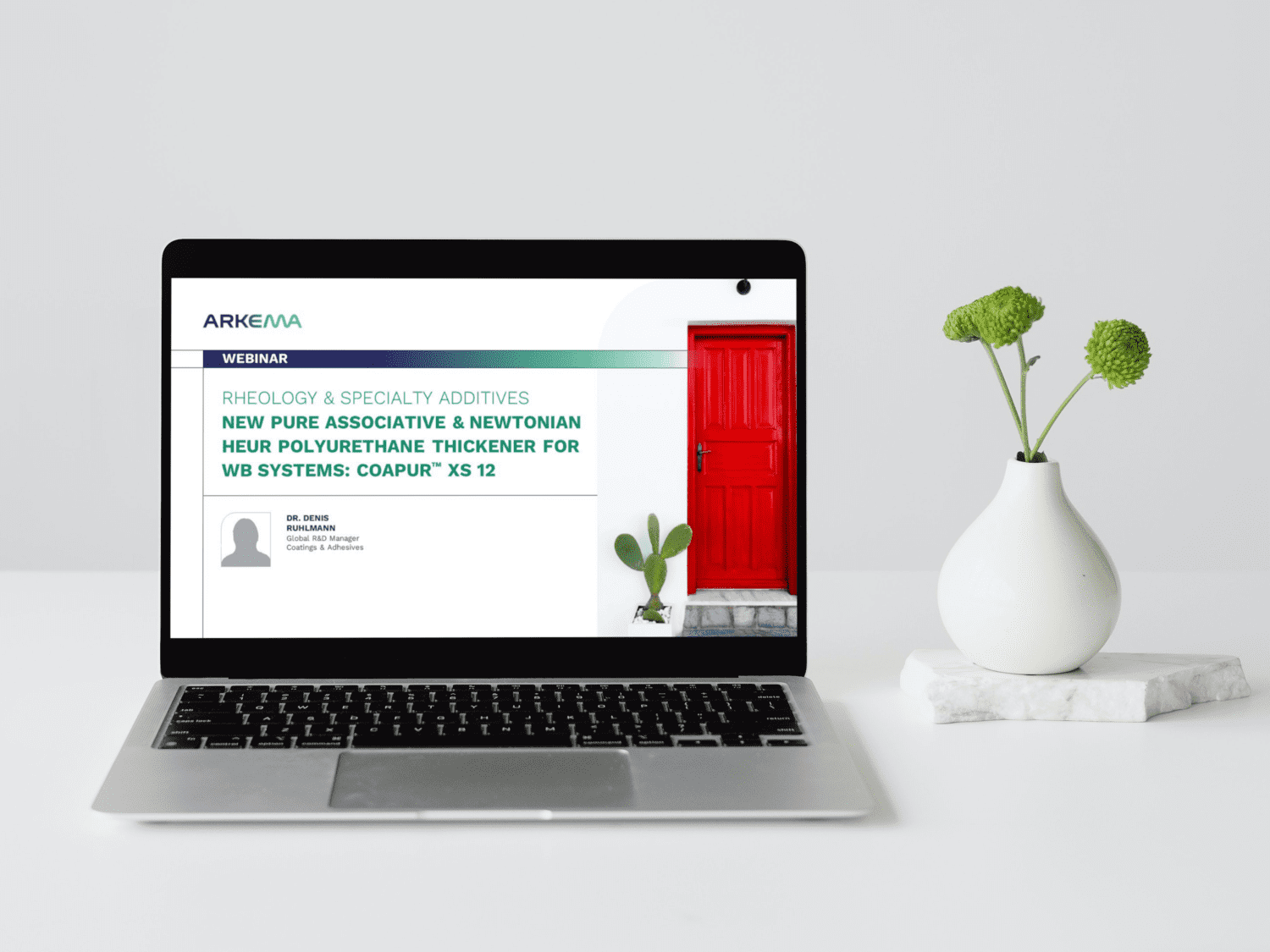
COAPUR™ XS 83: GO BEYOND THE LIMITS WITH PSEUDOPLASTIC HEUR THICKENER
-
RHEOLOGY MODIFIERS FOR METALLIC PIGMENTS
-
CRAYVALLAC® OPTIMA: RHEOLOGICAL ADDITIVE FOR PCM
-
COAPUR™ XS 83: HEUR THICKENER FOR WB ACRYLIC PRIMERS
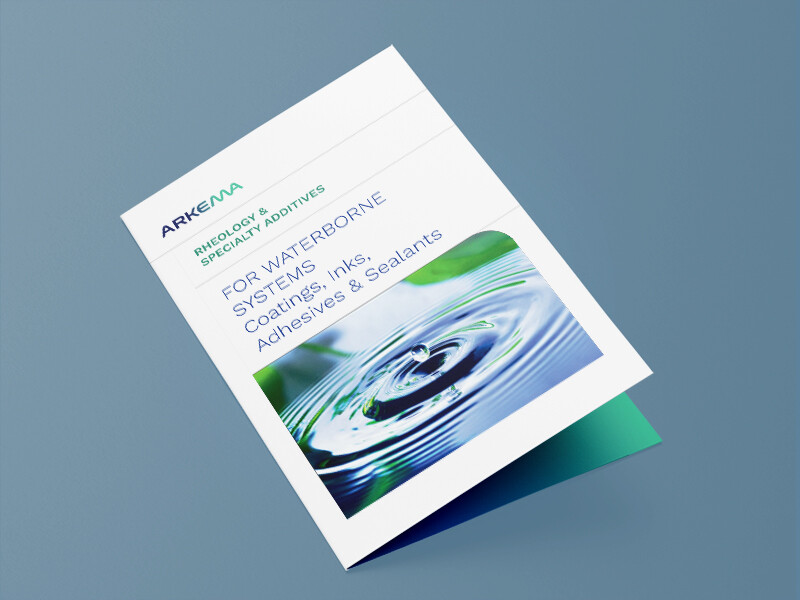
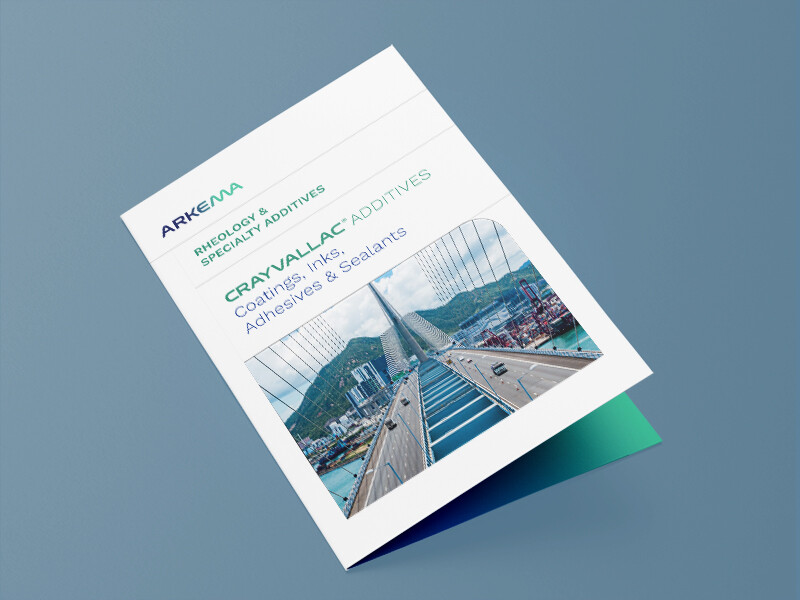
Download our rheology modifiers brochure
Enhancing paint properties with Arkema’s latest rheology modifier innovations
Arkema’s latest rheological modifier technology is designed to precisely balance thickening and thinning mechanisms.
By forming reversible internal networks and interacting with each dispersed particle, these solutions enable efficient structure build at rest while maintaining smooth flow under shear.
In both water based and other formulation platforms, these rheological modifiers provide effective control of viscosity, improving sag resistance, leveling and film uniformity.
This approach helps enhance application robustness, improve surface appearance and ensure consistent results across multiple coating applications, while maintaining coating performance.
Rheology modifiers as enablers of sustainability and formulation efficiency
Sustainability is a core driver of Arkema’s rheology developments.
Advanced rheological solutions support the transition from solvent-rich systems toward water based and high-solids systems, helping reduce reliance on oil-based structures while maintaining durability and resistance.
By optimizing rheological efficiency, these solutions allow more efficient use of raw materials, reduce formulation complexity and deliver long service life.
This contributes to lower environmental impact while delivering clear sustainability benefits and consistent coating quality over time.
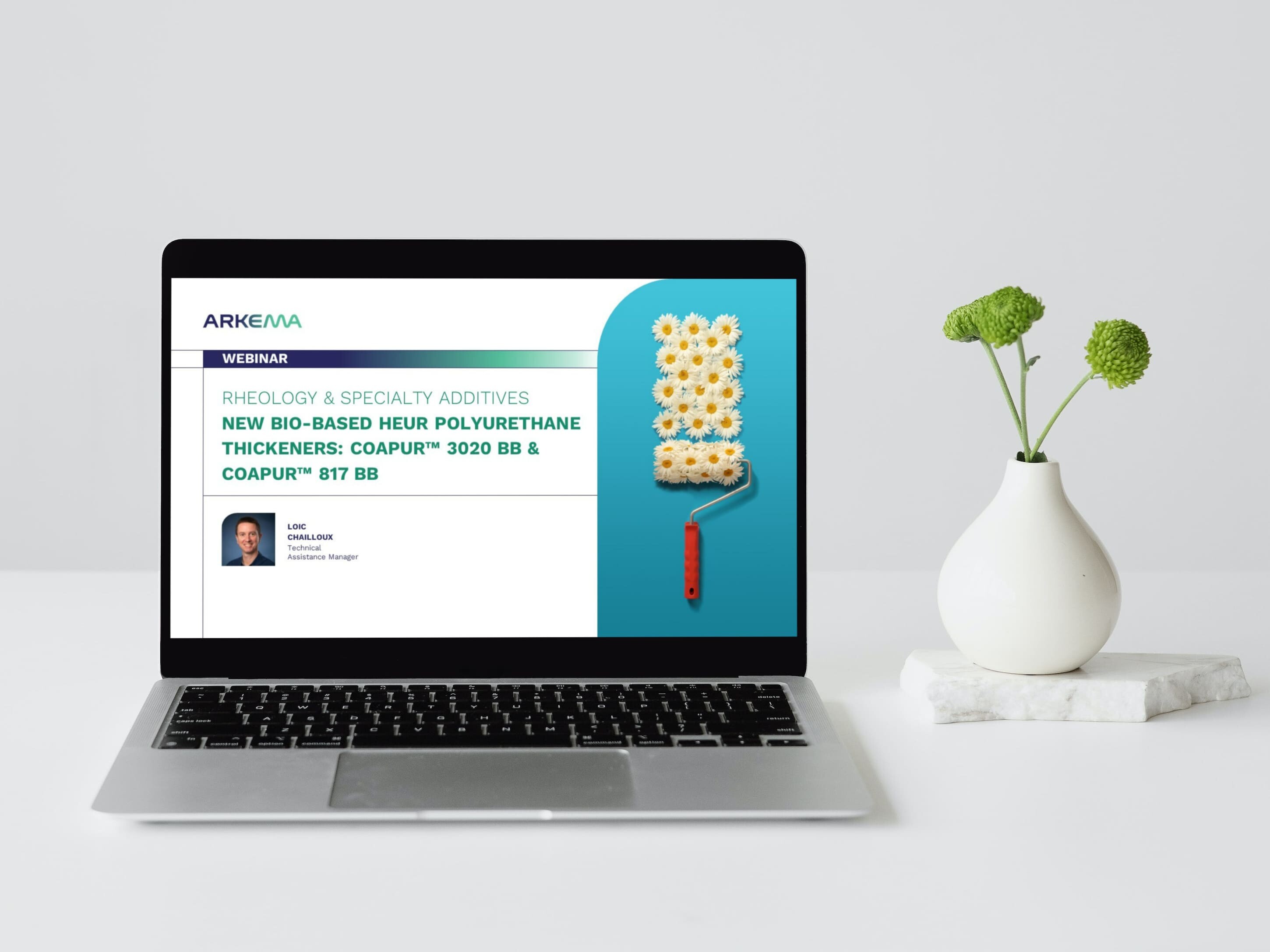
Arkema’s latest bio-based additive innovations combine advanced acrylic and polyurethane technologies to help formulators reduce environmental impact while maintaining high performance.
With more than 80% bio-based HEUR thickeners such as Coapur™ 817 BB and 3020 BB, these solutions enable the use of renewable feedstocks, support bio-preferred formulations, and deliver balanced rheology, durability, and washability.
By optimizing binder ratios and preserving application and aesthetic properties, Arkema’s bio-acrylic and bio-PU additives offer a concrete pathway toward more sustainable coatings without compromising quality.
Enabling the transition from solventborne to high-solids systems with rheology modifiers
Rheological modifiers play a critical role in enabling the transition from traditional solventborne formulations toward high-solids coating systems.
As solvent content is reduced, controlling viscosity and flow during application becomes more complex due to increased solids content and stronger interactions between formulation materials.
Advanced rheological modifier solutions are designed to build controlled, reversible structures that balance low-shear viscosity for sag resistance with shear-thinning behavior during application.
This rheological control enables efficient processing, smooth film formation and consistent coating properties, even in highly concentrated systems.
By stabilizing internal structure and managing rheological response throughout processing and application, these rheological solutions help formulators maintain coating performance while reducing solvent use.
They are therefore a key enabler for more sustainable formulations, supporting the shift to high-solids systems without compromising application efficiency or end-use durability.
Why choose Arkema’s rheology additives
Arkema offers a comprehensive range of rheology additives, built on the complementarity of multiple chemistries and formulation approaches, and developed by experts in specialty materials and applied rheology.
This portfolio spans a wide spectrum of rheology types, from associative systems to advanced modified polymer structures, enabling precise adaptation to different formulation systems and performance targets.
Thanks to a deep understanding of market-specific expectations, Arkema supports customers across paints, coatings and adjacent markets such as cosmetics, addressing key technical requirements including flow control, application robustness, stability and final appearance.
By working closely with formulators, Arkema helps design tailored rheology profiles that ensure accurate controlling of structure throughout formulation and application, delivering reproducible coating properties, reliable performance, and robust solutions from development to industrial scale.
Often asked questions to our coating resins experts
A rheological modifier controls the viscosity, flow and gel behavior of paints and coatings by structuring the formulation under different shear conditions.
It operates through interactions with formulation materials, such as polymers and dispersed particles, creating a reversible internal network that stabilizes the system at rest while allowing efficient application under shear.
This controlled rheological response is essential to achieve consistent coating properties, uniform film formation and long-term stability across a wide range of systems and applications.
Yes. Combining multiple rheology modifiers is a well-established formulation strategy used to optimize rheological response across different shear regimes.
Each modifier can address a specific function—such as structure build, flow control or particle suspension—resulting in a more efficient and stable system.
When properly balanced, these combinations improve formulation robustness, widen the application window and maintain consistent coating properties from production to end use.